2017年五月,台湾宣布同性恋婚姻合法
在中国乃至世界都掀起了一阵波动
台湾也成为亚洲第一个同性恋婚姻合法化的地区
近些年来,我们不断听见来自各方的“同性恋不是病”的声音
“恐同”也成为了一个受人指责的短语……
对于同性恋,你真正知道多少?
依然觉得它诡异、恶心、避之不及,还是尝试着理解它呢?
理解的前提是了解
我们的印象中,在欧洲和北美,人们对同性恋的看法普遍开明
而在连影视中的同性关系都被判为“不健康”的中国大陆
消除偏见可能还遥遥无期
那么,西方真的就如此开放
中国从古至今都如此“恐同”吗?
先让我们看看同性恋的历史沿革吧。
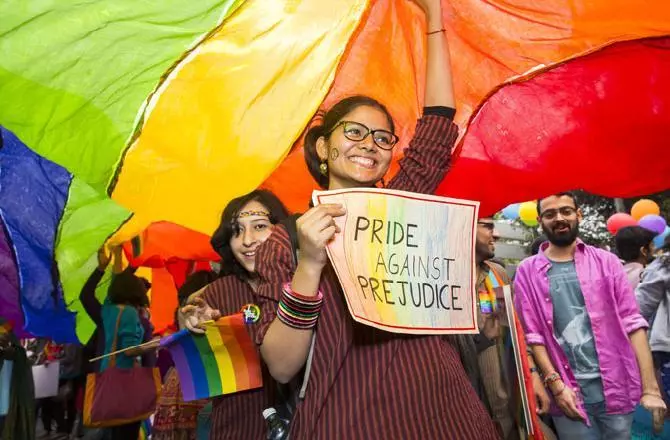
▼宣传平等 @LGBT Token
Ⅰ
中国
中国的传统文化并不反对同性恋
在古代甚至比西方更为宽容
同性恋与婚育也没有矛盾
孔子说:“诗三百,一言以蔽之,思无邪。”
同性恋能入诗,可见在孔子眼中,同性恋是很正常的感情。
1.1 炎黄时期
中国同性恋最早的起源可由华夏族的始祖黄帝说起。
清朝的纪昀(纪晓岚)在《阅微草堂笔记》中记载:“杂说称娈童始黄帝,殆出依托。”
“娈童”本义是指美少年,“娈”是容貌美好的意思,娈童一词在南北朝时开始专门指代与男人发生性行为的年轻男子。
▼ @中国的同性恋可追溯到黄帝?
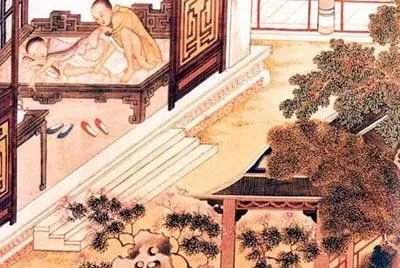
但他一方面提到了同性情欲始于黄帝的说法,另一方面又认为此说是基于依托古人的习惯,不足为据。
此外,由于至今仍无法证实黄帝是否存在过,因此这种说法的可靠性更降低几分。
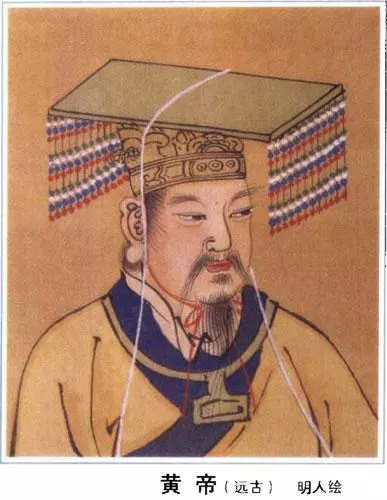
▼黄帝相 @《琴史——黄帝和他的白日梦》
1.2 两汉
汉哀帝好男色,在汉世皇族也不算什么新闻
《汉书·佞幸传》记载:“高祖时则有籍孺,孝惠时则有闳孺,此二人非有才能,但以婉佞贵幸,与王同卧起。”
汉成帝有宠臣张放,史称:“与上卧起,宠爱殊绝。”汉高祖刘邦喜爱籍孺,汉文帝爱邓通,汉武帝爱韩嫣……
到了汉哀帝这里,自然秉承了这“传统”,他宠爱的人叫董贤。
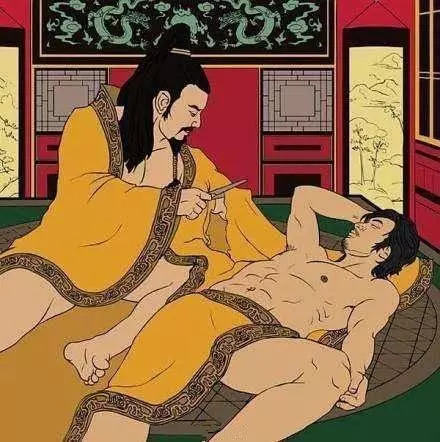
《汉书·佞幸传》:“(董贤)为人美丽自喜,哀帝望见,悦其仪貌,宠爱日甚。出则参乘,入御左右。常与上卧地。尝昼寝,上欲起,贤未觉,不欲动贤,乃断袖而起,其恩爱至此。”
后即以“断袖”或“断袖之欢”、“断袖之癖”称男宠。(《中国历史典故辞典》2010.10.6)
这段记载讲的是汉哀帝喜爱董贤。有一天,汉哀帝醒来后要去上早朝,发现袖子枕在董贤身下,哀帝不忍惊醒董贤,便挥剑将衣袖斩断。
从此“断袖之癖”就成了同性恋的别称。
▼“断袖之癖” @搜狐
1.3 魏晋南北朝
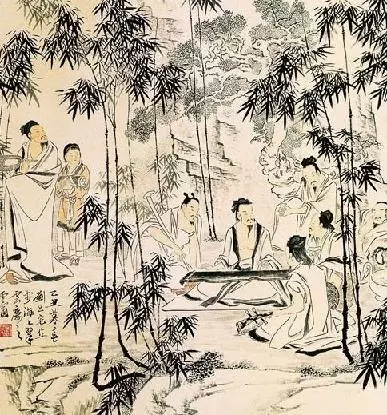
《世说新语》第十九记载山涛之妻窥视嵇康和阮籍同床共睡的行为。
阮籍的八十二首《咏怀诗》中有一首写的是同性之爱。
昔日繁华子,安陵与龙阳。
夭夭桃李花,灼灼有辉光。
悦怿若九春,磬折似秋霜。
流盻发姿媚,言笑吐芬芳。
携手等欢爱,宿昔同衣裳。
愿为双飞鸟,比翼共翱翔。
丹青著明誓,永世不相忘。
阮籍把同性之爱描写得非常美好
可见他本人起码不排斥同性恋;
阮籍有妻有子
也没有更多证据证明阮籍和嵇康是同性恋
故此种说法也只是有头无尾了。
▼嵇康阮籍 @华夏经纬网
1.4清代
从清代开始有考究的记载就更多了
在乾隆时期,同性恋是一个广泛的社会现象。
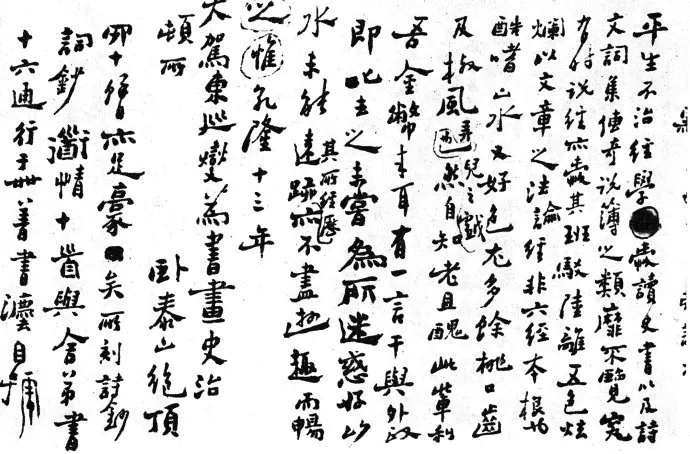
郑板桥也曾在《板桥自叙》中公开承认自己是同性恋:“余好色,尤喜余桃口齿,椒风弄儿之戏。”在这本书里,本人就提到自己‘断袖之癖’
▼《板桥自述》手稿,现藏于故宫博物馆 @谭锡钧
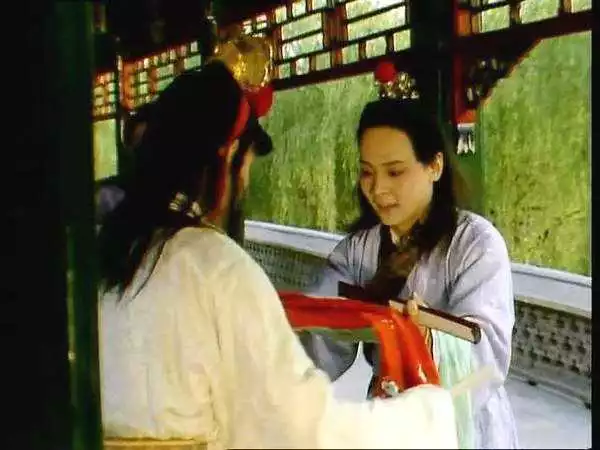
清代曹雪芹的《红楼梦》里,贾宝玉和蒋玉菡在33回就有超出同性的亲密举动。
当然贾宝玉是重在精神和灵魂上
同样是公子哥的薛蟠,在于肉体感官上的
薛大公子薛蟠则是明目张胆的求爱蒋玉菡
在明清时期,富二代,官二代多有养男宠和同性恋倾向。
▼宝玉赠汗巾子 @大风号
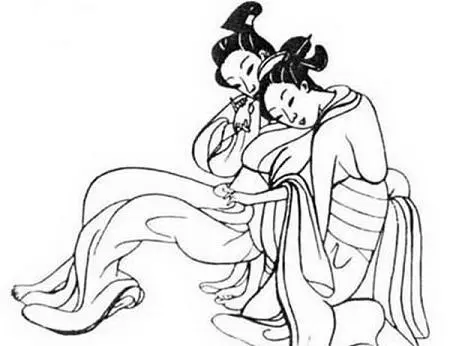
清代的女同性恋情形可谓至为激烈。
《粤游小志》记载:“尽十余年风气又复一变,则竟以姊妹花为连理枝矣,且二女同居,必有一女俨若藁砧者。”
金兰会的女子又称自梳女
凡是缔结金兰契的女子
一切婚约均属无效,男家不得强娶
她们誓不肯和男子婚嫁
即使被迫嫁人也不会住在夫家和丈夫同寝。
而结盟的二女则会同居
随后成双结对、誓不相负
临终前还会选择嗣女继承双方财产,死后也会被埋在一起。
▼自梳女 @网易新闻
1.5现代
在古代中国,男同为断袖、女同为磨镜
社会对同性恋一直是开放的态度。
而到了近代
在新中国意识形态的要求下
同性恋变成了精神病与流氓罪
直到21世纪才翻案,却也没有彻底翻身。
▼呼吁同性恋合法婚姻 @网易新闻

1997年,《刑法》删除了流氓罪,同性恋在中国不再是一种罪行;
2001年,《中国精神障碍分类与诊断标准第三版(CCMD-3)中删除了“自我和谐型”的同性恋,同性恋在中国不再是一种病症。
在同性恋去罪化和去病化以后
同性恋在中国的境况依然举步维艰。
在同性婚姻合法化在全世界遍地开花的时候
同性恋的话题在中国依然是个禁语。
中国什么时候才能让同性婚姻合法化呢?我们也不得为知。
Ⅱ
西方--希腊
在古希腊文化中
与同性的恋情是很正常甚至值得称赞的
这种文化可以从希腊神话中看出来。
希腊神话中描述了许多男英雄之间的爱情
甚至连众神之父宙斯都曾把美男子召来过夜。
相信不少人听过“阿喀琉斯之踵”,即一个人的弱点
这个典故的男主人公——阿喀琉斯也被认为和他的仆从、兼青年好友——普特罗克勒斯,有超出友谊的情感
▼阿喀琉斯为普特洛克勒斯包扎伤口 @个人图书馆
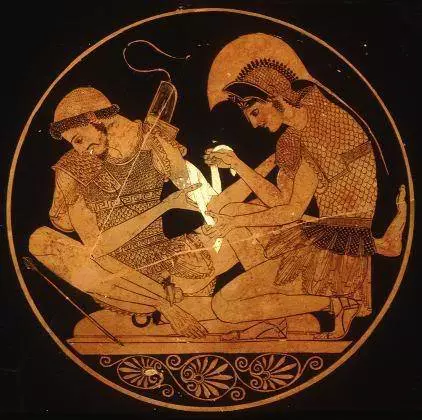
作为在特洛伊战争中英勇奋战的英雄
他的身边总少不了普特罗克勒斯的陪伴
而这陪伴给了他力量。
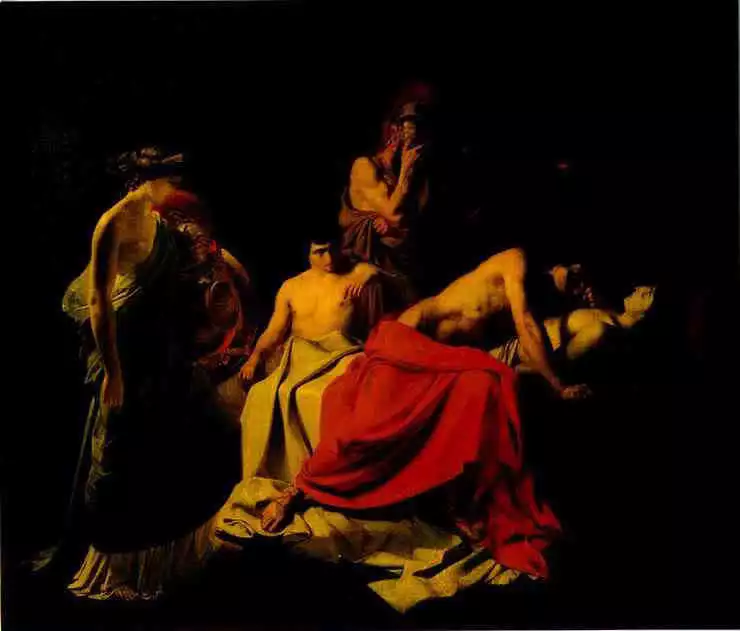
可见,希腊文化中,同性恋从不是什么可耻的话题。
▼阿喀琉斯伏在死去的普特罗克勒斯身上哭泣 @360doc.com
在古希腊,不仅男同性恋,当时女同性恋的风气也很盛行
有些女同性恋者参加打仗和狩猎活动,同另一个女人结婚。
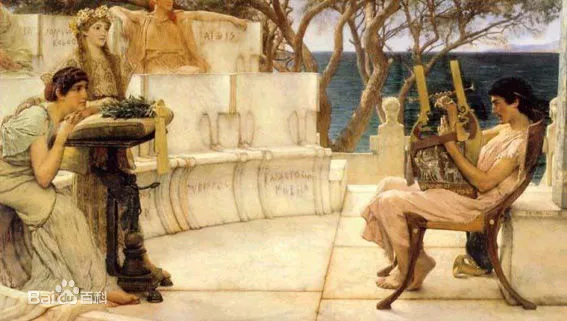
古希腊有个十分有才气的女诗人,叫萨福(Sappho),当时十分有名。她二十多岁时创办了一个女子学校,教授女学生们诗歌和音乐,除此之外还教给她们恋爱的艺术。在朝夕相处中,她渐渐地爱上了这些年轻漂亮的女学生们,以至于后来她即使有自己的家室,最终也抛夫弃子,寻找自己的爱情。
▼萨福之爱 @百度百科
古希腊盛行师生间的同性恋情
师者授业解惑,学生以情相报
所以这些带有强烈同性恋色彩的诗歌在当时不但没有遭禁,而且还广为传颂。
但最后萨福因遭到一位女恋人的拒绝,而跳海自杀,英年早逝。
同性恋遭到残酷迫害是从中世纪开始的
基督教会迫害同性恋
不仅因为教会推行禁欲主义
而且认为,同性恋反自然就是反上帝
所以它比异性恋更为邪恶
同时,基督教认为在独身、禁欲的条件下
修士和修士、修女和修女很容易发生同性恋
如果不对同性恋严厉镇压,就危及教会自身的生存。
因此,“反同”除了宗教原因,也有黑暗的政治要素在内
而“反同”成为了一种认知流传下来
以至于在当代社会
曾在千年前被歌颂的美好爱情竟被抹黑成妖魔鬼怪。
好在如今,越来越多的人已经认识到同性恋并非疾病
它不需要被治疗,也不是“变态”的代名词;
与再正常不过的自由恋爱相比
还不如拿更多心思去抵制恋童、跟踪狂等等,真正威胁到人们安全的性犯罪呢。
▼Japan-Pride @LGBT Token

世界上的黑暗还有很多,爱也有很多。
既然同性恋为互相带来的是温暖而不是痛苦
为什么要剥夺他们爱的权利呢?
希望终有一天,人们都能无所顾忌地爱自己爱的人。
▼raised-fists @LGBT Token

P.S 本文主要参考文献:百度百科词条《中国同性恋史》;百度百科《同性恋》;《凤凰原创——中国的同性恋可追溯到黄帝?》;大风号《郑板桥原来是同性恋》;陈高峰
P.P.S 本文为China Thinks Big创新研究项目所作,目的是为了让大家更清楚的从各个角度了解同性恋,同时公众号运营者也衷心祝愿参赛者出征大捷,金榜题名!

叮当猫的麻袋
All about space and time.

In May 2017, Taiwan announced that same-sex marriage was legal, stirring a wave of reaction across China and the world, and Taiwan became the first region in Asia to legalize same-sex marriage.
In recent years, we have constantly heard voices from all sides saying “homosexuality is not a disease,” and “homophobia” has become a phrase that draws criticism…
How much do you really know about homosexuality? Do you still find it bizarre, disgusting, something to be avoided at all costs — or do you try to understand it?
The premise of understanding is knowing. In our impression, in Europe and North America people generally hold enlightened views of homosexuality, while in mainland China — where even same-sex relationships on screen are ruled “unhealthy” — the elimination of prejudice may still be a distant prospect.
So, is the West really so open? And has China really been so “homophobic” from ancient times to the present? Let us first look at the historical development of homosexuality.
▼ Promoting equality @LGBT Token
Ⅰ China
Traditional Chinese culture does not oppose homosexuality; in ancient times it was even more tolerant than the West, and homosexuality was not in conflict with marriage and childbearing.
Confucius said: “The three hundred poems of the Book of Songs — in a word, their thoughts contain no depravity.” That homosexuality could enter poetry shows that, in Confucius’s eyes, it was a perfectly normal emotion.
1.1 The Age of Yan and Huang (the legendary emperors)
The earliest origins of homosexuality in China can be traced back to the Yellow Emperor, the progenitor of the Huaxia people.
Ji Yun (Ji Xiaolan) of the Qing dynasty recorded in Notes from the Thatched Cottage of Close Scrutiny: “Various accounts say that the practice of catamites began with the Yellow Emperor, but this is probably a fabrication.”
The term “luantong” (catamite) originally meant a beautiful youth — “luan” means fair of face — and from the Northern and Southern Dynasties it came specifically to refer to young men who had sexual relations with men.
▼ Can homosexuality in China be traced back to the Yellow Emperor?
But while he mentioned the notion that same-sex desire began with the Yellow Emperor, he also held that this claim was based on the habit of attributing things to the ancients, and was not sufficient as evidence. Moreover, since it still cannot be confirmed whether the Yellow Emperor ever existed, the reliability of this claim is diminished further still.
▼ Portrait of the Yellow Emperor @A History of the Qin: The Yellow Emperor and His Daydream
1.2 The Han Dynasties
Emperor Ai of Han favored male companions, which was hardly news among the imperial clan of the Han era.
The Book of Han · Biographies of the Favored records: “In Emperor Gaozu’s time there was Ji Ru, and in Emperor Hui’s time there was Hong Ru. These two men had no special talent, but were favored and honored merely for their charm and flattery, sharing the ruler’s bed.”
Emperor Cheng of Han had a favored minister, Zhang Fang, of whom the histories say: “He shared the emperor’s bed, and was loved beyond compare.” Emperor Gaozu Liu Bang loved Ji Ru; Emperor Wen loved Deng Tong; Emperor Wu loved Han Yan…
By the time of Emperor Ai of Han, this “tradition” was naturally carried on, and the one he favored was named Dong Xian.
The Book of Han · Biographies of the Favored: “(Dong Xian) was beautiful and pleased with himself. When Emperor Ai saw him from afar, he delighted in his looks, and loved him more each day. When they went out, Dong rode with him; when they were within, he attended at the emperor’s side. He often lay with the emperor. Once, during a daytime nap, the emperor wished to rise, but Dong Xian had not woken; not wishing to disturb him, the emperor cut off his own sleeve and rose — such was his tenderness.”
Thereafter male favorites were referred to by the terms “the cut sleeve” or “the pleasure of the cut sleeve,” and “the passion of the cut sleeve.” (Dictionary of Chinese Historical Allusions, 2010.10.6)
This passage tells of Emperor Ai of Han’s love for Dong Xian. One day, when Emperor Ai woke and wished to go to the morning court, he found his sleeve pinned beneath Dong Xian; unwilling to wake him, the emperor drew his sword and cut off the sleeve. From then on “the passion of the cut sleeve” became another name for homosexuality.
▼ “The passion of the cut sleeve” @Sohu
1.3 The Wei, Jin, and Northern and Southern Dynasties
A New Account of the Tales of the World, chapter nineteen, records how Shan Tao’s wife spied on Xi Kang and Ruan Ji sharing a bed.
Among Ruan Ji’s eighty-two poems Singing of My Cares, one is about love between men:
The dashing youths of days gone by, Anling and Longyang. Tender as peach and plum blossoms, dazzling with radiant light. Joyous as the nine springs, deferential as autumn frost. With flowing glances they gave off charm; in speech and laughter they breathed fragrance. Hand in hand they shared their love, night after night wearing the same clothes. They wished to be a pair of birds in flight, wings joined, soaring together. In painted vermilion they made their solemn vow, never to forget each other for all time.
Ruan Ji described love between men so beautifully that at the very least he personally did not reject homosexuality; yet Ruan Ji had a wife and children, and there is no further evidence that Ruan Ji and Xi Kang were homosexual, so this claim too is left without a conclusion.
▼ Xi Kang and Ruan Ji @Huaxia.com
1.4 The Qing Dynasty
From the Qing dynasty onward there are far more verifiable records; in the Qianlong era, homosexuality was a widespread social phenomenon.
Zheng Banqiao also openly admitted his homosexuality in Banqiao’s Own Account: “I am fond of sensual pleasure, and especially enjoy the ways of catamites.” In this book, he himself mentions his “passion of the cut sleeve.”
▼ Manuscript of Banqiao’s Own Account, now held in the Palace Museum @Tan Xijun
In Cao Xueqin’s Dream of the Red Chamber of the Qing dynasty, Jia Baoyu and Jiang Yuhan already show intimacy beyond the same-sex ordinary in Chapter 33.
Of course, Jia Baoyu’s focus is on the spiritual and the soul; the young lord Xue Pan, by contrast, is about the sensual and the physical, and openly courts Jiang Yuhan.
In the Ming and Qing dynasties, the sons of the wealthy and of officials often kept male favorites and had homosexual inclinations.
▼ Baoyu gives a sash @Dafeng
Female homosexuality in the Qing dynasty could be described as extremely intense.
Minor Records of Travels in Guangdong records: “Over some ten-odd years the customs changed once again, so that ‘sister flowers’ became ‘entwined branches,’ and when two women lived together, one of them would invariably act as if she were the husband.”
The women of the “Golden Orchid Society” were also called self-combed women (women who vowed to remain unmarried). For any woman who entered into a Golden Orchid pact, all marriage engagements were void, and the man’s family could not force her to marry. They swore never to wed a man, and even if forced to marry would not live in the husband’s home or share his bed.
The two allied women would live together, forming a couple and vowing never to betray each other. Before death they would even choose an adopted daughter to inherit both parties’ property, and after death they would be buried together.
▼ Self-combed women @NetEase News
1.5 Modern Times
In ancient China, male homosexuality was “the cut sleeve” and female homosexuality “polishing mirrors,” and society had long held an open attitude toward homosexuality.
But in the modern era, under the demands of ideology in New China, homosexuality became a mental illness and the crime of “hooliganism,” and it was not until the 21st century that the verdict was reversed — though even then it did not fully turn things around.
▼ Calling for legal same-sex marriage @NetEase News
In 1997, the Criminal Law removed the crime of hooliganism, and homosexuality was no longer a crime in China; in 2001, the Chinese Classification and Diagnostic Criteria of Mental Disorders, Third Edition (CCMD-3) removed “ego-syntonic” homosexuality, and homosexuality was no longer an illness in China.
After the decriminalization and de-pathologization of homosexuality, its situation in China nevertheless remains an uphill struggle.
At a time when the legalization of same-sex marriage is blossoming all over the world, the topic of homosexuality is still a taboo in China.
When will China ever legalize same-sex marriage? We simply do not know.
Ⅱ The West — Greece
In ancient Greek culture, love with someone of the same sex was quite normal and even praiseworthy — a culture that can be seen in Greek mythology.
Greek mythology describes many loves between male heroes; even Zeus, father of the gods, once summoned a handsome youth to spend the night.
Many people have surely heard of “Achilles’ heel” — meaning a person’s weak point. The protagonist of this allusion, Achilles, is also thought to have had feelings beyond friendship for his attendant and youthful close friend, Patroclus.
▼ Achilles bandaging Patroclus’s wound @Gerenwenku
As a hero who fought valiantly in the Trojan War, he was never without Patroclus’s company, and that company gave him strength.
Clearly, in Greek culture, homosexuality was never a shameful topic.
▼ Achilles weeping over the dead Patroclus @360doc.com
In ancient Greece, not only male homosexuality but also female homosexuality was very prevalent at the time. Some female homosexuals took part in war and hunting and married another woman.
Ancient Greece had a highly gifted poetess named Sappho, very famous in her day. In her twenties she founded a girls’ school, teaching her female students poetry and music, and besides this she taught them the art of love. In their day-to-day life together, she gradually fell in love with these young and beautiful female students — so much so that later, even though she had her own family, she ultimately abandoned husband and children to seek her own love.
▼ Sappho’s love @Baidu Baike
Ancient Greece saw a flourishing of same-sex love between teacher and student — the teacher imparting knowledge and dispelling doubts, the student repaying with affection.
So these poems with their strong homoerotic overtones were, at the time, not only not banned but widely recited. In the end, however, Sappho, rejected by a female lover, threw herself into the sea and died young.
The cruel persecution of homosexuality began in the Middle Ages. The Christian church persecuted homosexuality not only because the church promoted asceticism, but also because it held that homosexuality, being against nature, was against God, and therefore more evil than heterosexuality.
At the same time, Christianity believed that under conditions of celibacy and abstinence, monks with monks and nuns with nuns could easily fall into homosexuality, and that if homosexuality were not severely suppressed, the church’s own survival would be endangered. Thus, beyond religious reasons, “anti-homosexuality” also contained dark political elements.
And “anti-homosexuality” was passed down as a kind of received belief, so that in contemporary society a beautiful love once celebrated a thousand years ago has been smeared into something monstrous and demonic.
Fortunately, today more and more people have come to recognize that homosexuality is not a disease. It does not need to be “cured,” nor is it a synonym for “pervert.” Compared with the utterly ordinary matter of free love,
it would be far better to put more effort into resisting pedophilia, stalking, and other sexual crimes that truly threaten people’s safety.
▼ Japan-Pride @LGBT Token
There is still much darkness in the world, and much love too. Since what homosexuality brings to each other is warmth rather than pain, why deprive them of the right to love?
I hope that one day, everyone will be able to love the person they love without a single reservation.
▼ Raised fists @LGBT Token
P.S. Main references for this article: the Baidu Baike entries “History of Homosexuality in China” and “Homosexuality”; “Phoenix Original — Can homosexuality in China be traced back to the Yellow Emperor?”; Dafeng’s “It turns out Zheng Banqiao was homosexual”; Chen Gaofeng. P.P.S. This article was written for a China Thinks Big innovation research project, with the aim of helping everyone understand homosexuality more clearly from every angle. The operator of this account also sincerely wishes the contestants a triumphant campaign and great success!